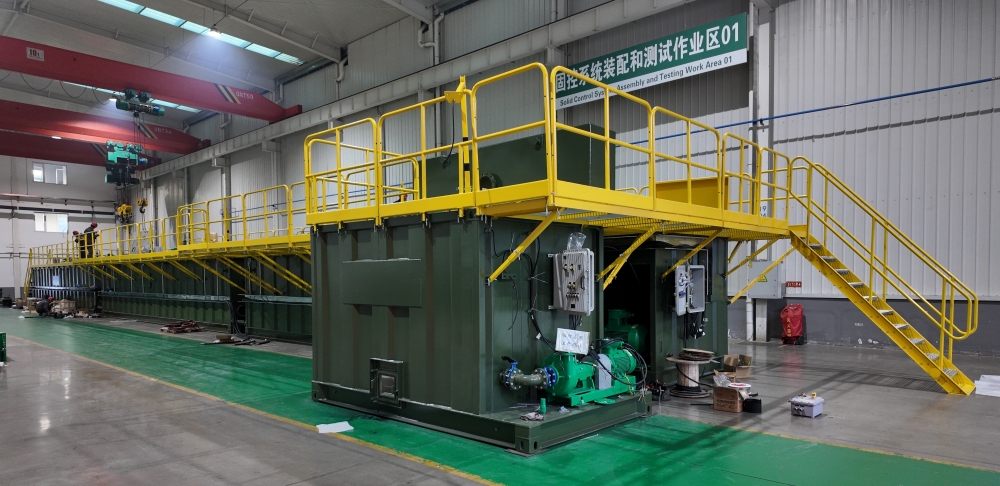
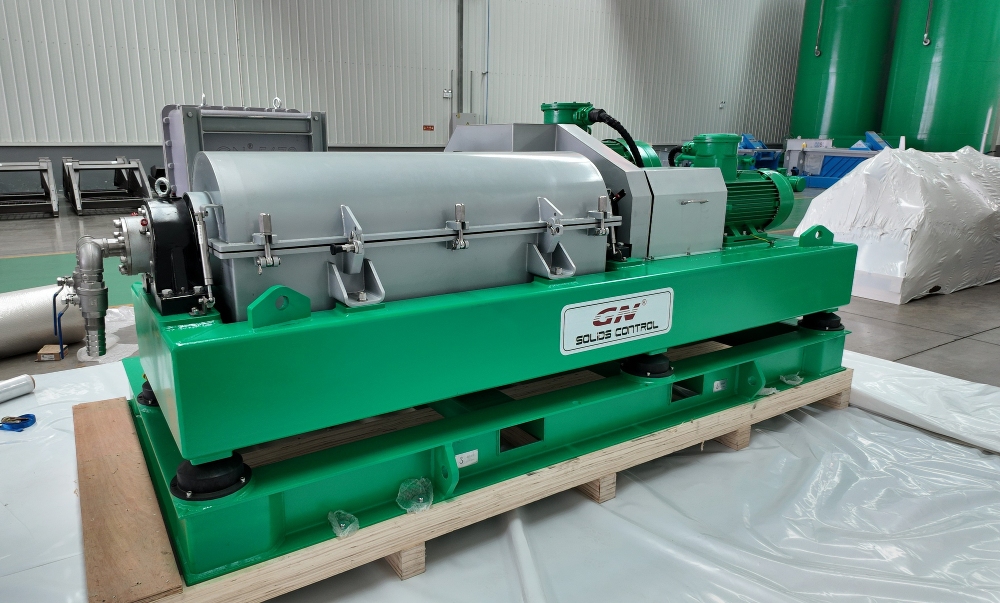
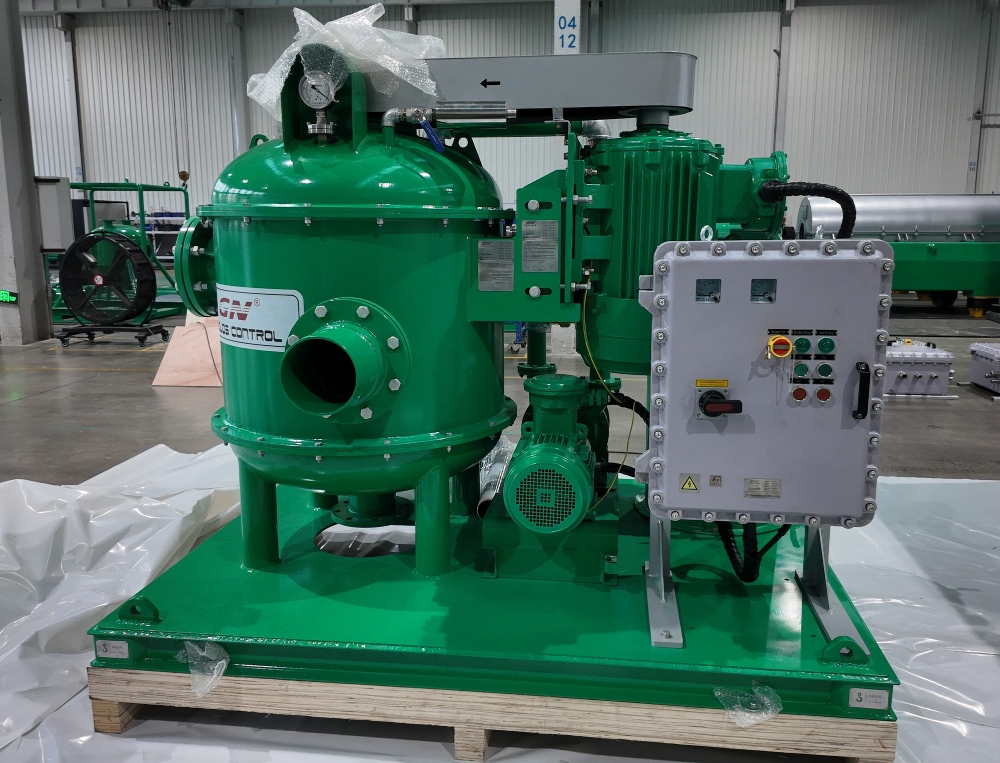
Hebei GN Solids Control Co., Ltd. has specialized in solids control and waste management equipment since 2008. GN stands as one of the largest manufacturers of solids control equipment globally. We operate three factories spanning a total area of 110,000 square meters in China and maintain branch offices with service capabilities in both the United States and Australia. Designated as a National High-Tech Enterprise, GN boasts a robust management system. Since 2010, we have consecutively held the American API Quality Management System Certification for 15 years and maintained China Classification Society certifications for ISO9001, ISO14001, and ISO45001 over many years. Our solids control equipment bears certifications from EU CE, ATEX, and International IECEx. GN employs an ERP Cloud + CRM Cloud management system for seamless production and operation, ensuring digital control over the production process and quality traceability. Approximately 70% of our products are exported internationally, reaching over 70 countries worldwide.
A mud system in the oil and gas industry is a critical circulation system that pumps specially engineered fluid, called drilling mud, down and up a wellbore during drilling. Its primary job is to ensure safe, efficient, and controlled drilling operations.
The system is a complex blend of chemistry, mechanics, and engineering. The table below summarizes the key functions of the drilling mud itself.
How the Mud Circulation System Works
The system operates in a continuous loop, involving both surface equipment and downhole circulation.
Surface Equipment: The journey starts and ends in the mud tanks, where mud is stored, tested, and treated. Mud pumps send it under high pressure through surface piping.
Downhole Path: Mud travels down the hollow drill string and jets out of nozzles in the drill bit, cooling it and clearing cuttings.
Return Path: The mud, now carrying cuttings, flows up the annulus back to the surface.
Cuttings Removal & Recirculation: At the surface, cuttings are removed by a series of solids control equipment: first the shale shaker, then possibly a desander, desilter, and centrifuge for finer particles. The cleaned mud returns to the tanks to be reconditioned and pumped again.
ypes of Drilling Mud
The base fluid is chosen based on the geological formation, cost, and environmental regulations.
Water-Based Mud (WBM): The most common and generally least expensive type. It uses water as the continuous phase, with clays (like bentonite) and polymers added for viscosity and other properties.
Oil-Based Mud (OBM): Uses diesel or mineral oil as the base. Offers superior lubrication, better shale inhibition, and higher temperature stability, but is more expensive and has greater environmental impact.
Synthetic-Based Mud (SBM): Uses man-made, low-toxicity fluids. Provides performance similar to OBM but with a better environmental profile, making it common offshore.
Gaseous Systems: Use air, mist, or foam. Employed in low-pressure or “underbalanced” drilling conditions where liquid mud might be lost to the formation
For more detail of the mud system, find Michael.
Whatsapp: + 86 178 0179 9913 for a prompt follow and reply.
Email: michael@gnseparation.com/michael@gnsolidscontrol.com/michael@gnsolidscontrol.co